Buy versorgungszentrum.eu ?
We are moving the project
versorgungszentrum.eu .
Are you interested in purchasing the domain
versorgungszentrum.eu ?
domain@kv-gmbh.de · 0541-91531010
Buy versorgungszentrum.eu ?
Is the depletion-type MOSFET self-conducting?
No, the depletion-type MOSFET is not self-conducting. It requires an external voltage to be applied to the gate terminal in order to control the flow of current between the source and drain terminals. The depletion-type MOSFET operates in the depletion mode, meaning that it conducts current when no voltage is applied to the gate terminal, unlike the enhancement-type MOSFET which requires a voltage to be applied to the gate terminal to allow current flow. **
When does copper stop conducting?
Copper stops conducting electricity when it reaches its superconducting transition temperature, which is approximately -210 degrees Celsius. At this temperature, copper loses all electrical resistance and becomes a superconductor. This means that it can conduct electricity without any loss of energy, making it extremely efficient for certain applications such as in MRI machines and particle accelerators. However, achieving and maintaining such low temperatures is challenging and expensive, so superconducting copper is not commonly used in everyday electrical applications. **


Similar search terms for Self-conducting
Top-Angebote
Products related to Self-conducting:
-
AMiO 04733 Self-diagnosis equipmentSupplementary Article / Supplementary Info Info 2: with OBD connector; Supplementary Info: OBD II; Operating system: Android, iOS, Windows; Certificate: ISO 9141-2, ISO 14230-4, ISO 15765-4 CAN , ISO 15765-4 CAN; Colour: black/red5,59 £*Shipping: 8,45 £Secure redirect to the provider
-
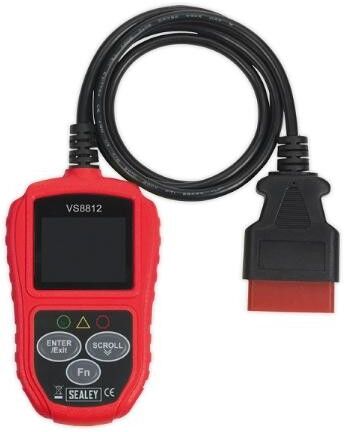
SEALEY VS8812 Self-diagnosis equipmentConnector type: EOBD ; Parameter: Live Data; Housing Colour: red; Supplementary Article / Supplementary Info Info 2: with OBD cable; Length [mm]: 124; Width [mm]: 72; Height: 18; Gauge: with TFT display; Operating temperature from [°C]: 0; Operating temperature to [°C]: +60; Test standard: SAE; Certificate: SAE J1979 2007; Construction Year from: 2001 Petrol, 2004 Diesel78,49 £*Shipping: 8,45 £Secure redirect to the provider
-
Bosch DIAGNOSTICS 0 684 400 560 Self-diagnosis equipmentWeight [g]: 500; Width [mm]: 125; Height: 44; Depth [mm]: 180; Temperature range from [°C]: 0; Temperature range to [°C]: 40; Information Transfer: Bluetooth; Voltage from [V]: 8; Voltage to [V]: 282349,00 £*Shipping: 1,99 £Secure redirect to the provider



-
When is the transistor conducting?
A transistor is conducting when it is in the "on" state, allowing current to flow between its collector and emitter terminals. This occurs when a sufficient voltage is applied to the base terminal, causing the transistor to become forward-biased and allowing current to flow through it. In this state, the transistor acts as a closed switch, allowing the flow of current through it. **
-
Can old metals stop conducting electricity?
Yes, old metals can stop conducting electricity due to a process called corrosion. Over time, metals can be exposed to moisture and other environmental factors that cause them to oxidize and form a layer of corrosion on their surface. This layer can act as an insulator, preventing the flow of electricity through the metal. Additionally, old metals may also suffer from physical damage or wear and tear, which can affect their ability to conduct electricity. **
-
What are methods for conducting research?
There are several methods for conducting research, including qualitative and quantitative approaches. Qualitative research methods involve gathering non-numerical data through techniques such as interviews, focus groups, and observations. Quantitative research methods involve collecting numerical data and analyzing it using statistical techniques, such as surveys and experiments. Other methods include case studies, content analysis, and action research. Researchers may also use a combination of these methods to gain a more comprehensive understanding of their research topic. **
-
What do these conducting gestures mean?
These conducting gestures are used by a conductor to communicate with the musicians in an orchestra or ensemble. The upward movement of the baton signals the musicians to start playing or to increase the volume, while the downward movement indicates a decrease in volume or the end of a section. The side-to-side motion helps to keep the musicians in sync and can also indicate changes in tempo or dynamics. Overall, these gestures help the conductor to guide and shape the music being performed. **


What are the differences in conducting?
Conducting is the art of leading a musical performance, and there are several key differences in conducting styles. One major difference is the physical gestures used by conductors to communicate with the musicians. Some conductors use large, sweeping gestures to convey emotion and energy, while others may use more subtle movements to guide the ensemble. Additionally, the level of involvement and interaction with the musicians can vary among conductors, with some taking a more authoritative approach and others fostering a collaborative atmosphere. Lastly, the interpretation of the music and the conductor's ability to convey their vision to the ensemble can also differ, resulting in unique performances. **
Is the gynecologist conducting a thorough examination?
It is difficult to determine if the gynecologist is conducting a thorough examination without more specific information. A thorough examination typically includes a review of medical history, physical examination, and possibly additional tests or screenings based on individual needs. It is important for patients to communicate any concerns or symptoms they may have to ensure a comprehensive evaluation. **
Top-Angebote
Products related to Self-conducting:
-
WEBASTO 1320920A Self-diagnosis equipmentOperating System: Windows; Manufacturer Restriction: AirTop 2000/S/ST/STC, Air Top 3500/5500/ST, AirTop EVO 3900/5500, Air Top Evo 40/55, HL 90, Thermo Top, Thermo Top C/E/P/Z, Thermo Top Evo, Thermo Top 50 Eco, Thermo 90/S/ST/Pro, Thermo Top Pro , 120/150, Thermo, S230/S300/S350/S400, Thermo Plus , 230/300/350, GBW 300593,99 £*Shipping: 1,99 £Secure redirect to the provider
-
AMiO 04733 Self-diagnosis equipmentSupplementary Article / Supplementary Info Info 2: with OBD connector; Supplementary Info: OBD II; Operating system: Android, iOS, Windows; Certificate: ISO 9141-2, ISO 14230-4, ISO 15765-4 CAN , ISO 15765-4 CAN; Colour: black/red5,59 £*Shipping: 8,45 £Secure redirect to the provider
-
Is the depletion-type MOSFET self-conducting?
No, the depletion-type MOSFET is not self-conducting. It requires an external voltage to be applied to the gate terminal in order to control the flow of current between the source and drain terminals. The depletion-type MOSFET operates in the depletion mode, meaning that it conducts current when no voltage is applied to the gate terminal, unlike the enhancement-type MOSFET which requires a voltage to be applied to the gate terminal to allow current flow. **
-
When does copper stop conducting?
Copper stops conducting electricity when it reaches its superconducting transition temperature, which is approximately -210 degrees Celsius. At this temperature, copper loses all electrical resistance and becomes a superconductor. This means that it can conduct electricity without any loss of energy, making it extremely efficient for certain applications such as in MRI machines and particle accelerators. However, achieving and maintaining such low temperatures is challenging and expensive, so superconducting copper is not commonly used in everyday electrical applications. **
-
When is the transistor conducting?
A transistor is conducting when it is in the "on" state, allowing current to flow between its collector and emitter terminals. This occurs when a sufficient voltage is applied to the base terminal, causing the transistor to become forward-biased and allowing current to flow through it. In this state, the transistor acts as a closed switch, allowing the flow of current through it. **
-
Can old metals stop conducting electricity?
Yes, old metals can stop conducting electricity due to a process called corrosion. Over time, metals can be exposed to moisture and other environmental factors that cause them to oxidize and form a layer of corrosion on their surface. This layer can act as an insulator, preventing the flow of electricity through the metal. Additionally, old metals may also suffer from physical damage or wear and tear, which can affect their ability to conduct electricity. **
Similar search terms for Self-conducting
-
SEALEY VS8812 Self-diagnosis equipmentConnector type: EOBD ; Parameter: Live Data; Housing Colour: red; Supplementary Article / Supplementary Info Info 2: with OBD cable; Length [mm]: 124; Width [mm]: 72; Height: 18; Gauge: with TFT display; Operating temperature from [°C]: 0; Operating temperature to [°C]: +60; Test standard: SAE; Certificate: SAE J1979 2007; Construction Year from: 2001 Petrol, 2004 Diesel78,49 £*Shipping: 8,45 £Secure redirect to the provider
-
Bosch DIAGNOSTICS 0 684 400 560 Self-diagnosis equipmentWeight [g]: 500; Width [mm]: 125; Height: 44; Depth [mm]: 180; Temperature range from [°C]: 0; Temperature range to [°C]: 40; Information Transfer: Bluetooth; Voltage from [V]: 8; Voltage to [V]: 282349,00 £*Shipping: 1,99 £Secure redirect to the provider
-
Bosch DIAGNOSTICS 0 684 400 590 Self-diagnosis equipmentWeight [g]: 500; Width [mm]: 125; Height: 44; Depth [mm]: 180; Temperature range from [°C]: 0; Temperature range to [°C]: 40; Information Transfer: Bluetooth; Voltage from [V]: 8; Voltage to [V]: 28; Product line: KTS 5903975,00 £*Shipping: 1,99 £Secure redirect to the provider
-
Tommee Tippee Essential Baby Healthcare KitA hair-care product. All-in-One Solution: Comprehensive grooming kit for babies and toddlers. Portable & Stylish: Compact, waterproof carry case with a secure zipper. Precision & Comfort: High-accuracy digital thermometer with an automated warning sound. Gentle Care: Soft-bristle hairbrush and non-scratch comb for delicate scalps.22,36 £*Shipping: 6,94 £Secure redirect to the provider
-
What are methods for conducting research?
There are several methods for conducting research, including qualitative and quantitative approaches. Qualitative research methods involve gathering non-numerical data through techniques such as interviews, focus groups, and observations. Quantitative research methods involve collecting numerical data and analyzing it using statistical techniques, such as surveys and experiments. Other methods include case studies, content analysis, and action research. Researchers may also use a combination of these methods to gain a more comprehensive understanding of their research topic. **
-
What do these conducting gestures mean?
These conducting gestures are used by a conductor to communicate with the musicians in an orchestra or ensemble. The upward movement of the baton signals the musicians to start playing or to increase the volume, while the downward movement indicates a decrease in volume or the end of a section. The side-to-side motion helps to keep the musicians in sync and can also indicate changes in tempo or dynamics. Overall, these gestures help the conductor to guide and shape the music being performed. **
-
What are the differences in conducting?
Conducting is the art of leading a musical performance, and there are several key differences in conducting styles. One major difference is the physical gestures used by conductors to communicate with the musicians. Some conductors use large, sweeping gestures to convey emotion and energy, while others may use more subtle movements to guide the ensemble. Additionally, the level of involvement and interaction with the musicians can vary among conductors, with some taking a more authoritative approach and others fostering a collaborative atmosphere. Lastly, the interpretation of the music and the conductor's ability to convey their vision to the ensemble can also differ, resulting in unique performances. **
-
Is the gynecologist conducting a thorough examination?
It is difficult to determine if the gynecologist is conducting a thorough examination without more specific information. A thorough examination typically includes a review of medical history, physical examination, and possibly additional tests or screenings based on individual needs. It is important for patients to communicate any concerns or symptoms they may have to ensure a comprehensive evaluation. **
* All prices are inclusive of VAT and, if applicable, plus shipping costs. The offer information is based on the details provided by the respective shop and is updated through automated processes. Real-time updates do not occur, so deviations can occur in individual cases. ** Note: Parts of this content were created by AI.